Thompson CTH 1500 Bedienungsanleitung
Thompson Nicht kategorisiert CTH 1500
Lies die bedienungsanleitung für Thompson CTH 1500 (1 Seiten) kostenlos online; sie gehört zur Kategorie Nicht kategorisiert. Dieses Handbuch wurde von 6 Personen als hilfreich bewertet und erhielt im Schnitt 4.8 Sterne aus 5 Bewertungen. Hast du eine Frage zu Thompson CTH 1500 oder möchtest du andere Nutzer dieses Produkts befragen? Stelle eine Frage
Seite 1/1
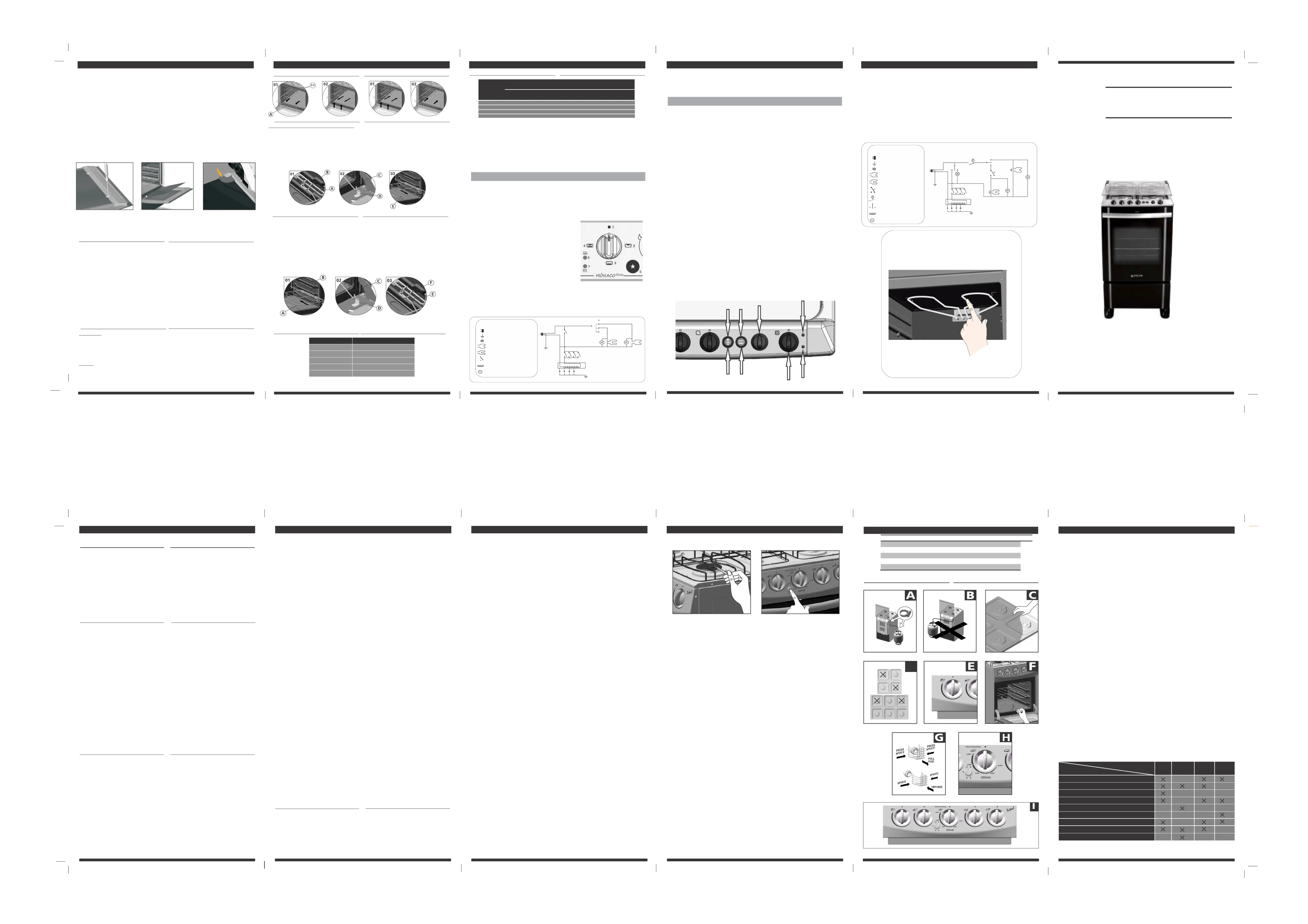
PRODUCT CHARACTERISTICS
BURNER POWER
OVEN GRILLES
DISMANTLING / DESMONTAJE
DISMANTLING / DESMONTAJE
TECHNICAL SPECIFICATIONS
DISASSEMBLING THE SLIDING GRILLE
ASSEMBLING THE SLIDING GRILLES
INSTALLATION
CARACTERISTICAS DE LOS PRODUCTOS
POTENCIA DE LAS HORNILLAS
REJILLA DEL HORNO
ASSEMBLY / MONTAJE
DESMONTAJE DE LA REJILLA DESLIZANTE
ESPECIFICACIONES TÉCNICAS
ENSAMBLAJE DE LA REJILLA DESLIZANTE
INSTALACIÓN
AutomaticManual
· Use resistance gloves when handling or cleaning
the oven.
· For stoves with integrated warming drawer, is
recommended to empty contents before using the
oven.
· The manufacturer is not responsible if you do not
follow safety precautions.
· The stove should be placed on a flat surface.
· Do not use the appliance if it is in contact with water
or drafts and do not operate with wet hands. Do not
forget that the place must be ventilated.
· Install the stove away from flammable materials or
heat-conducting materials.
· Leave a minimum space of 5cm between the stove
and other furniture.
· Leave a minimum of 70 – 90cm between the top of
the stove and any furniture above it.
· There is a variety of specifications according to the
chosen range, if you require any other features contact
your resale company to purchase it.
o Top glass li with handle or circular;
o Partial or total view at the oven’s doorl;
o Stainless steel table;
o Warmer drawer;
o Gas safety valve;
o Forged burners and cups;
o Automatic ignition;
o Oven Light.
To replace the lamp do not forget taking it of the
energy supplier and to change it press the sides of the
protection (Pic. H) pulling it out. After replacing it, press
the sides and push the protection to fix it.
Disassembling
01 - Pull the shelf (Pic. A) from the front, as far as the
stopping point (P.P.), when it locks automatically.
02 - With the shelf in its position, lift the front until the
point where it is possible to take it out without forcing it.
Remove the oven shelf by pulling it towards you.
Assembly
01 - To replace the oven shelf, the front should be higher
than the back, enabling it to fit into the guides.
02 - After fitting it in place, push the shelf until it fits
perfectly into the oven.
01 - Remove the extremities of the carriages (Pic. A) of
the central support of the sliding grill (Pic. B).
02 - Remove the carriages (Fig. C) of the grilles supports
(Fig. D).
03 - And finally remove the sliding grilles (Pic. E).
Obs.: It is not advisable to remove the sliding grilles
support pins that are fastened in the lateral of the oven.
01 - Insert the sliding grilles (Pic. A) in its support (Pic.
B).
02 - Insert the carriages (Pic. C) in the grill supports (Pic.
D).
03 - Rotate the carriages in the direction where is
located the sliding grilles and insert the extremity of the
carriages (Pic. E) in the central support of the sliding
grilles (Pic. F). The carriages should be fastened in the
second wire of the central support, according to
drawing.
01 - Saque la extremidad de los arrastraderos (Fig. A)
del apoyo central de la rejilla deslizante (Fig. B).
02 - Saque los arrastraderos (Fig. C) de los soportes de
la rejilla (Fig. D).
03 - Después quite la rejilla deslizante (Fig. E).
Atención: No es aconsejable quitar los apoyos de la
rejilla deslizante que están asegurados en el lateral del
horno.
Voltaje 220V
Potencia grill 1000W
Potencia horno 2000W
Temperatura del horno 50ºC hasta 280ºC
Tiempo programado Hasta 120 minutos
Voltage 220V
Grill Power 1000W
Oven power 2000W
Oven temperature 50 ° C to 280 ° C.
Scheduled time Up to 120 minutes
Gas Connection
· Use clamps to fix the gas pipe in the stove and in the
pressure regulator (Pic. A).
· The gas pipe should never go behind the back of the
appliance. Its heat resistance is until 70º C (178º F) and
the appliance's back can reach higher levels of
temperature (Pic B). If needed, a flexible metal pipe
should be used to avoid accidents.
· Our stoves are produced to be used with liquefied
petroleum gas (LPG). To transform to natural gas (NG)
please contact the nearest supplier or authorized
distributor.
Tempered glass lid
The stove has a resistant tempered glass lid. Never
close it while the burners are on or hot, or while the oven
is in use. Do not put hot pans on the glass top.
Protecting your the stainless steel table
· The stainless steel top comes with a plastic film
protection (blue) to avoid stains and scratches. Do not
forget removing it before use. (Pic. C)
· Remains of the film should be removed by
appropriated remover or a soft sponge with neutral
soap.
· Do not let water flows directly on the cooktop,
remove it immediately with a soft dry cloth to avoid
marks and do not spill detergents directly to it.
Turning the burners on
· After connecting the stove on the gas, press the
chosen knob, turn it left to the higher position and press
the automatic ignition, controlling the flame as you
need. (Pic. D)
Flame level control
· The flame control allows multiple levels of flame.
The flame remains stable in all positions, keeping the
correct temperature in each case and providing
economy.
Stoves with automatic ignition
· The power supply for our appliances are 127/230V
– 50/60Hz. Please verify the tension needed.
· Connect the stove to the electric device and gas
bottle, raise the top glass lid and check if all the burners
are correctly installed before continuing to operate the
switches (ignition).
· Before lighting the oven, do not forget to open the
door to avoid gas accumulation inside.
Cleaning the oven
Use cloths or sponges with neutral soap or
detergents to clean the shelves, floor and upper part of
the oven, rinse well and dry with a dry cloth.
Cleaning the top table
To clean it, remove the trivets and leave the burners
in their places. This will prevent residues falling into the
gas jets.
Cleaning the inside of the oven’s door
· Some of the ranges have the ineer glass removable
for a better clean up;
· Use a screwdriver to remove the two screws that
hold the glass;
· Remove the glass carefully;
· To assembly it, do the opposite operaion.
Attention: Follow the instructions to avoid possible
damages to the automatic ignition system.
FNC Oven (Easy clean + self cleaning)
· The oven carries a nonstick coating, preventing the
accumulation of fats and making it easier to remove. For
its correctly maintenance, it is indicated to make one
fatty baking (meat, for example) and then one non fatty
(brad, for example).
· The easy clean product is applied all over the
internal area of the oven, coating all entire surfaces.
Lighting the oven (manual)
· Press the oven's button, turning it left to the high
position (Pic. E), light the burner through the hole in the
inferior part (Pic. F), regulating the flames as required.
Attention: To check the lighting, simply look through
the hole in the inferior part.
Lighting the oven automatically
· Press the button to the left to the maximum
position, keep pressing the button while you press the
ignition button. Verify if it is lightened and then keep
pressing for more 10 seconds.
Lighting the oven with top grill
· Raise the top glass lid and open the oven
completely;
· Press and turn the button to the grill position;
· Press the ignition button for a few seconds and the
grill burner will lighten instantly;
· In the event of power failure, use a match or a
lighter.
Oven heat selector
(5 positions of temperature control)
· Most of our products have the oven's button in the
center of the panel.
· The control allows 5 stages of temperature
regulation (Pic. H). Providing a better adequacy to each
type of cooking. To select the right temperature to your
necessity consult the table below:
causar quemaduras.
· Evite acumular líquidos grasientos en la mesada,
o en otras partes de la cocina.
· Nunca cierre la tapa de vidrio mientras las hornallas
de la mesada estén calientes o mientras se esté
utilizando el horno.
· No coloque objetos sobre la tapa de vidrio, ella
puede romperse causando accidentes.
· Cuando manipule o retire los recipientes con
alimentos del horno, utilice guantes térmicos de
protección para evitar quemaduras.
· En las cocinas que poseen calentador de platos,
retire los utensilios de la cocina antes de utilizar el
horno.
Control gradual de la llama
· Control gradual de la llama permite múltiples
graduaciones. Se mantiene la llama siempre estable
desde la alta hasta la baja, proporcionando economía y
una temperatura adecuada para cada tipo de
Como limpiar el horno
Para limpiar las rejillas, el piso del horno y la parte
superior del horno, usar paños o esponjas con jabón
neutro, enjuague bien y seque con un paño seco.
Limpieza de la mesada
Para limpiar la mesada de la cocina, retire las rejillas
y mantenga las hornallas en el lugar. Este procedimiento
evita la caída de residuos sobre los oídos inyectores de
gas.
Limpieza interna de la puerta
· En algunas cocinas el vidrio interno de la puerta
puede ser removido para la realización de la limpieza.
· Utilice un destornillador para retirar los 2 tornillos
que sujetan el vidrio;
· Retire el vidrio con cuidado hasta sacarlo
totalmente;
· Para el montaje, ejecute la operación contraria.
Cocinas con encendido automático
· La red eléctrica del encendido automático es
127/230V - 50/60Hz. Verifique la tensión (voltaje)
deseada.
· Conecte la cocina a la red eléctrica y al gas,
levante la tapa de vidrio de la mesada y verifique si
todas las hornallas están correctamente instaladas,
antes de proceder al accionamiento del interruptor
eléctrico (ignición).
· Antes de encender el horno, abra totalmente su
puerta para evitar que se acumule gas dentro del
mismo.
Atención: Siga las orientaciones para evitar posibles
daños en el sistema de encendido automático.
Horno FNC (limpia fácil + autolimpiante)
· El horno de la cocina posee esmalte antiadherente
que no permite que la grasa se acumule en el horno,
facilitando internamente su remoción. Para que el
esmalte auto limpiante funcione correctamente se debe
realizar una cocción grasosa (ejemplo, carne) y otra no
grasosa (ejemplo, pan). El limpia fácil se aplica en toda
el área interna y en la puerta del horno. Toda su
superficie está revestida con esmalte limpia fácil.
Encendido del horno manual
·Para el encendido del horno, no se olvide de
levantar la tapa de vidrio de la mesada y dejar la puerta del
horno totalmente abierta, antes de proceder al
encendido del interruptor eléctrico (ignición).
· Presione la perilla del horno girando a la izquierda hasta
la posición alta (Fig. E), y encienda el quemador a través del
orificio existente en el piso del horno (Fig. F), regulando la
llama e acuerdo con la necesidad.
Atención:Para constatar el encendido, basta mirar por el
visor en la abertura (orificio) existente en el piso del horno.
Encendido del horno automático
· Presione la perilla del horno girando a la izquierda
hasta la posición máxima, manteniendo la perilla
apretada, accione el interruptor de encendido eléctrico.
· Verifique que el quemador del horno esté
encendido y continúe apretando la perilla del horno por
aproximadamente 10 segundos.
Encendido del horno con top grill
· Levante la tapa de vidrio en la mesada y abra
totalmente la puerta del horno;
· Presione la perilla del horno girando a la derecha
hasta la posición que indica “grill”;
· Accione el interruptor de encendido eléctrico por
algunos segundos y el quemador se encenderá
automáticamente;
· Si falta energía utilice un fósforo o encendedor.
Temperatura del horno
(Control de temperatura en 5 posiciones)
· La mayoría de las cocinas poseen la perilla del horno
en el centro del panel.
· El registro del horno permite regular la
temperatura en cinco fajas (Fig. H) proporcionando
mayor adecuación para la cocción de los alimentos.
Para seleccionar la temperatura requerida para su
alimento, consulte la tabla a continuación:
· La cocina deberá estar sobre una superficie plana y
nivelada.
· Evite lugares húmedos o con corrientes de aire,
pero no se olvide que el ambiente debe proveer
renovación de aire.
· Instale la cocina distante de materiales y
productos combustibles (alcohol, gasolina, etc.) y no
resistentes al calor.
· Deje un espacio libre de 70 a 90 cm entre la mesada
de la cocina y el purificador / campana o cualquier
armario colocado arriba de la cocina.
· En nuestros modelos de cocinas, hay una
diversificación con relación a las características
presentadas, se les debe solicitar a nuestros
revendedores, en el momento de su adquisición.
o Tapa de vidrio redondeada o con visel;
o Visor parcial o total;
o Mesada en acero inoxidable;
o Calienta platos;
o Perillas con válvula de seguridad;
o Quemador de mesada en aluminio forjado;
o Encendido eléctrico;
o Luz en el horno.
Para substituir la lámpara no se olvide retirar el
enchufe del tomacorriente y efectuar el cambio
presionando las extremidades del protector (Fig. H)
empujándolo afuera. Después de la sustitución,
presione nuevamente hasta que encaje en los huecos.
Desmontaje
01 - Tire la rejilla (Fig. A) por la parte frontal hasta el punto
de parada (P.P.) a partir de donde la rejilla estará trabada
automáticamente.
02 - Con la rejilla aún en esta posición, eleve la parte frontal
de la rejilla hasta el punto donde sea posible retirarla sin
hacer esfuerzo. Retire la rejilla del horno tirando de ella en
su dirección.
Ensamblaje
01 - Para colocar la rejilla del horno es necesario que la parte
frontal este más alta que la parte de atrás,
posibilitando así el encaje de las guías.
02 - Después del encaje anterior empuje la rejilla hasta el
perfecto encaje en el horno.
01 - Introduzca la rejilla deslizante (Fig. A) en el apoyo
del horno (Fig. B).
02 - Introduzca los arrastraderos (Fig. C) en los
soportes de la rejilla (Fig. D).
03 - Gire los arrastraderos en la dirección donde se
localiza la rejilla deslizante e introduzca la extremidad
de los arrastraderos (Fig. E) en el apoyo central de la
rejilla (Fig. F). Los arrastraderos deben fijarse en el
según alambre del apoyo central, de acuerdo con el
dibujo.
Conexión de gas
· Utilice abrazaderas para fijar la manguera de gas
en la cocina y en el regulador de presión fijado en la
garrafa (Fig. A).
· La manguera de gas nunca debe pasar por la parte
trasera de la cocina. ¿Por qué? Porque la manguera
resiste a una temperatura de hasta 70ºC (178º F) y el
calor que se concentra en la parte trasera de la cocina
alcanza temperaturas más elevadas y esto puede hacer
que se derrita la manguera y ocasionar explosiones y
incendios (Fig. B).
· En caso que esto no sea posible, es indispensable
el uso de manguera metálica flexible para evitar
accidentes.
· Las cocinas se producen originalmente para uso de
gas envasado (GLP). Para transformar la cocina a gas
natural (GN), recurra a un representante de su región.
Tapa de vidrio templado
· La cocina posee tapa de vidrio templado
resistente. Nunca la cierre mientras las hornallas de la
mesada estén encendidas, las rejillas calientes o el
horno en utilización.
Encendido de los quemadores de la mesada
· Conecte la cocina al gas. Presione (empuje) la
perilla de la hornalla escogida girándola hacia la
izquierda hasta la posición alta, y encienda el
quemador regulando la llama de acuerdo con la
necesidad (Fig. D).
Protección de la mesada inoxidable
· Las mesadas de acero inoxidable vienen protegidas
con una película plástica (plástico azul) para evitar
rayas y manchas. No olvide retirar esta película al
instalar la cocina (Fig. C).
· Los residuos del adhesivo deben ser removidos
con un paño embebido en removedor y enseguida con
una esponja suave y jabón neutro, terminando así
la operación de limpieza.
· No deje que el agua se seque o evapore
directamente sobre la mesada inox. Enjuáguela
inmediatamente con un paño seco y suave, evitando
manchas en la mesada, provocadas por el exceso de
cloro en el agua. No use esponja de acero o similares
que rayen la mesada. Evite derramar removedor o
detergente directo sobre la mesada.
Cuidados con el gas
· Para su seguridad, mantenga el regulador de
presión del gas cerrado cuando no esté usando la
cocina.
· Antes de substituir la garrafa de gas, verifique que
las perillas estén cerrados.
· Nunca use llamas o chispas para localizar fugas de
gas, lo que puede causar incendios. Use espuma hecha
con jabón, en caso que haya fuga se van a formar
burbujas y usted puede mirar dónde está la fuga.
· Solamente encienda las hornallas después de tener
certeza que no hay fugas en la instalación.
· Si siente olor de gas dentro de su casa, para su
seguridad tome las siguientes providencias: cierre el
regulador de presión de gas; no encienda ningún tipo
de llama; no mueva los interruptores eléctricos; abra
las ventanas y las puertas, permitiendo más
ventilación del ambiente.
· Al encender su horno mantenga la puerta del
mismo abierta hasta que la llama se estabilice.
· Faltando energía eléctrica, verifique que ninguna
hornalla está abierta antes de usar el fósforo para
encender la llama.
· En las cocinas con lámparas y encendedores
automáticos, retire el enchufe de la tomacorriente
antes de hacer cualquier tipo de servicio de
mantenimiento y limpieza.
· Use siempre regulador de presión de gas, para
cualquier tipo de garrafa, pues la ausencia del mismo
causará exceso de presión con fugas de gas, lo que
puede causar incendio.
· Instale solamente un producto para cada garrafa
de gas.
· A los productos químicos inflamables (ejemplo:
alcohol, gasolina, kerosén, etc.) se los debe
guardar lejos de su cocina, pues pueden provocar
incendios.
· El diámetro mínimo del recipiente de las hornallas
de la mesada para ser usado en este producto es de
12cm, para que ningún desplazamiento haga que se
vuelque el recipiente.
· Cable dañado debe ser substituido por el
fabricante, agente autorizado o persona calificada.
· No se permite el uso de recipientes con base
convexa en este producto, o anillo de soporte.
Care with the gas
· For your safety keep the gas pressure regulator
turned off when not in use.
· Make sure all the control knobs are off before
changing the gas bottle.
· Do not use flames or sparks to look for leaks of
gas. You can use soap foam, appearing bubbles where
the leak is coming off.
· If the smell gas, follow the instructions: Turn off
the gas bottle's regulator; do not light any form of
spark; do not operate electric switches. Open all doors
and windows to create ventilation.
· When lighting the oven, leave the door open until
the flame is stabilized.
· In an electrical power shortage, check if all the
burners are off before using matches or lighters.
· For ovens with electric ignition and light,
disconnect the appliance from the wall outlet before
maintenance or cleaning.
· Always use a pressure regulator for the gas bottle
to avoid excessive pressure.
· Do not keep flammable products near the stove,
there is a risk of fire.
· The support for cookware is made for a minimum
diameter of 14cm.
· Any electric damage must be replaced by an
authorized agent or qualified person.
· Use only cookware with horizontal bottoms.
789
234
20" Popular
Models
Modelos
Width
Ancho
Depth
Profundidad
Ranges dimensions (cm)
Medidas de las cocinas (cm)
Height
Altura
Height**
Altura**
Liters
Litros
Net
Liquido
Oven
Horno
Weight
Peso
Height*
Altura*
48,357,0
85,3/88,4
86,4/89,5
126,046,021,7
32,2
33,8
40,5
82,5
107,0
119,5
133,0
126,0
133,0
96,0
86,4/89,5
96,5
94,5
85,3/88,4
94,5
64,0
64,0
58,0
57,0
76,0
77,0
20" Premium
30" Popular
30" Premium
Manual de instrucciones
Instruction Manual
Cocinas Domésticas a Gas
com Horno Eléctrico
Domestic Gas Stoves
with Electric Oven
EnglishEnglish
EnglishEnglishEnglish
EspañolEspañolEnglishEspañolEnglishEspañol
EspañolEspañolEspañol
CongratulationsFelicitaciones
CONTENTS
SAFETY INSTRUCTIONS
ÍNDICE
INSTRUCCIONES DE SEGURIDAD
You have just acquired a product with high quality.
This manual is made for consumers and extends to
the technical service and resale network. It has
been developed to provide the information
necessary for the correct installation, use and
maintenance, ensuring a longer life for your
product. The utilization of your stove without
reading its manual puts in risk its efficiency and life
length. Please read the instructions carefully to
obtain the maximum performance of your range.
Safety instructions................................................ Pg 1
Care with the gas.......................................... Pg 2
Installation........................................................... Pg 2
Gas connection............................................... Pg 3
Tempered glass lid......................................... Pg 3
Protecting your stainless steel table............... Pg 3
Turning the burners on................................. Pg 3
Flame leve control....l.................................... Pg 3
Stoves with automatic ignition....................... Pg 3
FNC Oven (Easy Clean + Self Cleaning)....... Pg 4
Lighting the oven (manual)............................ Pg 4
Lighting the oven automatically.................... Pg 4
Oven heat selector......................................... Pg 4
Ilustrations........................................................... Pg 5
Using the oven.............................................. Pg 6
Cleaning and Maitenance.................................... Pg 6
General cleaning of the stove........................ Pg
6 Cleaning the
oven.......................................... Pg 7
Cleaning the top table................................... Pg 7
Product characteristics......................................... Pg 7
Oven grilles......................................................... Pg 7
Dismantling..................................................... Pg 7
Assembly......................................................... Pg 7
Disassembling the sliding grille............................ Pg 8
Assembling the slinding grill................................ Pg 8
Technical specifications........................................ Pg 9
Burner Power....................................................... Pg 9
Stove connection diagrams.................................. Pg 9
Table Stove.......................................................Pg 10
Assembling the accessories...................Pg11
Instrucciones de seguridad................................... Pg 1
Cuidados con el gas........................................ Pg 2
Instalación............................................................ Pg 2
Conexión de gas............................................. Pg 3
Tapa de vidrio templado................................. Pg 3
Protección de la mesada inoxidable................ Pg 3
Encendido de los quemadores de la mesada.. Pg 3
Control gradual de la llama............................ Pg 3
Cocinas con encendido automático.................. Pg 3
Horno FNC (limpia fácil + autolimpiante)...... Pg 4
Encendido del horno manual.......................... Pg 4
Encendido del horno con top grill................. Pg 4
Temperatura del horno.................................... Pg 4
Ilustraciones......................................................... Pg 5
Utilización del horno....................................... Pg 6
Limpieza y mantenimiento................................... Pg 6
Limpieza general de la cocina........................ Pg
6 Como limpiar el
horno................................... Pg 7
Limpieza de la mesada................................... Pg 7
Caracteristicas de los productos.......................... Pg 7
Rejilla del horno.................................................. Pg 7
Desmontaje..................................................... Pg 8
Montaje........................................................... Pg 8
Desmontaje de la rejilla deslizante....................... Pg 8
Ensamblaje de la rejilla deslizante...................... Pg 8
Especificaciones tecnicas...................................... Pg 9
Potencia d e las hornillas.......................................Pg 9
Diagramas de conexión de las cocinas............... Pg 9
Cocina de mesada..............................................Pg 10
Montaje de los accessorios.................................Pg 11
· Your stove is for domestic use and should be used
by people competent to operate it.
· Never transport your stove with the oven's door
open, this could cause serious damage to your product.
· Keep children away from the stove while in use
and soon after. The heat from its pieces can cause
serious injury.
· Place the cookware with their handles turned
inwards to prevent accidents.
· Heat food in opened cookware, the heat in a
cookware closed increases internal pressure and can
cause explosions.
· Take care when cooking with flammable products,
like oil and fat.
· In case of fire with oil and fat, turn off the
appliance, and cover the cookware with its lid, a damp
cloth or salt. Never add water, in contact with the oil it
will spread even more.
· Never close the glass lid of the appliance when the
burners are hot.
· Do not use the appliance as a working or storage
surface, you may break the glass.
· Su cocina es para uso doméstico y la deben utilizar
personas capacitadas para manejarla.
· Nunca transporte su cocina con la puerta del
horno abierta, pues podrá causar serios daños a su
producto.
· Mantenga a los niños lejos de la cocina cuando
esté en funcionamiento o justo después de su uso.
La temperatura cerca de las hornallas de la mesada,
puerta del horno, tiradores y paredes externas es alta y
puede causar quemaduras.
· Coloque los utensilios sobre la rejilla de la mesada
de la cocina con los cables volcados hacia dentro.
Esto ayuda a evitar que los niños tiren de el.
· Caliente los alimentos con los embalajes abiertos,
pues en los totalmente cerrados el calor aumenta la
presión interna pudiendo causar explosión.
· Al utilizar aceite o grasa en frituras el cuidado debe
ser mayor, pues son inflamables.
· Caso la grasa o aceite se incendien, cierre
todas las perillas y apague las llamas con una tapa de
olla, paño mojado o tire sal; nunca tire agua pues en
contacto con la grasa caliente ella se esparce, pudiendo
Usted acaba de adquirir un producto con alta
tecnología. Este manual esta destinado a los
consumidores, extensivo a la red de asistencia
técnica y revendedores de cocinas a gás para
uso doméstico. Fue elaborado con el objetivo
de suministrar informaciones necesarias para
instalación, utilización y mantenimiento de estos
productos y garantizar una vida útil más larga. La
utilización de las cocinas domésticas sin la lectura
del manual coloca en riesgo la eficiencia y la vida
útil del producto. Lea con atención las
instrucciones para obtener excelente desempeño
y utilización correcta de su cocina.
1
EnglishEspañol
* Dimensions with package / Medidas con embalaje
** Dimensions with lid open / Medidas de la cocina con la tapa abierta
Obs.: Dimensions without package/ Medidas sin embalaje
LP. supply pressure - 2.75 Kpa / Presión de alimentación para GLP - 2.75 Kpa/28 mBar
Natural gas supply pressure - 1.96 Kpa / Presión de alimentación para GN - 1.96 Kpa/20 mBar
Equipment category - II / Categoría del aparato - II
2,3
2,3
CAUSE / CAUSA
Burner does not
light
La hornilla no
se enciende
Automatic ignition
is not working
Encendido automático
no funciona
Yellow flame
marking pans
Llama amarilla
manchando las olas
Low or extinguished
flame
Llama baja o
apagándose
PROBLEMS / PROBLEMA
Using the oven
· The heat distribution is uniform, please follow basic
instruction to optimize the performance: Preheat the
oven in the maximum temperature before putting the
meal inside the oven: 10 minutes for the 4 burners and
15 minutes for the 5 or 6 burners.
o Dough: After pre-heating, place it in the oven and
set the temperature.
o Meat: After pre-heating, place it in the oven and set
the temperature, check when it has finished roasting
and switch to the maximum temperature to grill.
· Avoid opening the door constantly.
· Check through the oven's door glass, saving time,
gas and assuring a better cooking.
· Adjust the baker in the center of the oven, avoiding
touching the sides and back of the oven.
· Never place the food directly in the rack or in the
inferior part of the oven. Do not place the any aluminum
foil or similar on the rack that blocks the air flotation.
General cleaning of the stove
· Before cleaning turn off the electricity plug. Use a
non-abrasive cloth or sponge and neutral soap for
cleaning the stainless steel parts and non-stick coated
areas. Do not allow water to dry or evaporate directly on
the stainless top, remove it immediately with a soft dry
cloth, avoiding marks caused by excessive chlorine in
the water.
· Never use wire wool or similar cleaning pads to
clean any part of the stove.
Important: Use only water or neutral soap to clean the
panel and sides.
· To clean the burners, allow them to cool and use
wire wool and soap, leaving a shine appearance, the
rinse and dry it completely. Never leave it resting in
vinegar or lime.
· Putting hot burners in contact with cold water can
cause damages.
· Be careful when cleaning the top without the cups,
do not let residues fall into the orifices of gas
conduction.
Utilización del horno
· La utilización de calor es uniforme, pero se deben
seguir algunas instrucciones básicas para sacar el
máximo provecho del horno: haga un precalentamiento
encendiendo el horno en la temperatura máxima antes
de colocar el alimento: 10 minutos para cocinas con 4
hornallas y 15 minutos para cocinas con 5 o 6 hornallas.
o Pastas: Después del precalentamiento, coloque la
asadera en el horno y pase a la temperatura deseada.
o Carnes: Después del precalentamiento, coloque la
asadera en el horno y pase a la temperatura
deseada. Cuando esté asada, pase a la
temperatura máxima, hasta alcanzar la coloración
deseada.
· Evite abrir constantemente la puerta del horno.
· Acompañe la cocción a través del visor del horno,
con la luz interna encendida (en los modelos que
poseen este recurso), así usted economiza tiempo,
gas y garantiza una buena cocción del alimento.
· Ajuste la asadera en la parte central del horno. No
toque en el fondo o en los laterales del horno.
· Nunca hornee comida directamente en el
quemador o en una bandeja apoyada en el quemador
del horno. No coloque sobre la rejilla, papel aluminio
o cualquier otro que impida la circulación de aire caliente
por el horno.
Limpieza general de la cocina
· Antes de iniciar la limpieza de la cocina retire el
enchufe del tomacorriente. Para la limpieza de las
partes esmaltadas y de acero inoxidable, use un paño
humedecido o esponja no abrasiva y jabón neutro. No
deje que el agua se seque o evapore directamente sobre
la mesada de acero inoxidable, enjuáguela
inmediatamente con un paño seco y suave, evitando
manchas en la mesada provocadas por el exceso de
cloro en el agua.
· Nunca utilice esponja de acero o similares en
la limpieza de cualquier parte de la cocina.
Importante: En la limpieza del panel y partes laterales,
use solamente agua y jabón neutro, pues el alcohol,
esponja de acero o detergentes pueden dañarlas.
· Para lavar las hornallas déjelos enfriar y use
esponja de acero y jabón en barra, pues otros
productos no darán brillo al aluminio, después
enjuáguelos completamente. Nunca los deje de remojo
en vinagre o limón.
· La colocación de las hornallas aún calientes en el
agua fría podrá provocar que se deforme
(torciéndolos).
Before calling for Authorized Service go through the following procedures according to the table below:
Antes de llamar al Servicio Autorizado haga las siguientes verificaciones que se muestran la tabla:
Warning:Many stove bad-functioning problems are due to worn, or poor quality pressure regulators. Therefore check if the regulator is in good condition.
Atención:Muchos de los problemas de mal funcionamiento de la cocina se deben a que los reguladores de presión de la garrafa, por lo tanto, verifique si el
regulador está en buen estado.
6
Gas has run out
Dirty or damp burners
The gas tap is off
The gas tap is past its expiry date
The spark plugs (electrodes) are damp or dirty
The stove in a draft
The gas jets are dirty or blocked
Burners / flame diffusers are badly seated
The stove is not connected to the electrical socket / there is no electricity at the socket
El gas se está terminando
Las hornillas están sucias o mojadas
El registro de gas está cerrado
El registro de gas está con fecha vencida
Las bujías están mojados u sucios
Las puntas inyectoras están sucias o obstruidas
Los oídos inyectores están sucios u obstruidos
Los quemadores / esparcidores están mal encajados
La cocina no está conectada al enchufe / el enchufe no está energizado
EnglishEspañol
ILUSTRATIONS
ILUSTRACIONES
5
11
EnglishEspañol
PRESSPRESS
PUSH
DANGER
PERIGO
Nota:
Las resistencias del horno y grill no
funcionan juntas;
El termostato no controla la
temperatura del grill;
Cuando el horno alcanza la
temperatura deseada, la función de la
resistencia opera intermitentemente
encendiendo y apagando la luz.
Note:
The resistances of the oven and grill
do not operate together;
The thermostat does not control the
temperature of the grill;
When the oven reaches the desired
temperature, the resistance function
operates intermittently turning on and
turning off the light.
TECHNICAL SPECIFICATIONS / ESPECIFICACIONES TÉCNICAS
EnglishEspañol
10
INSTALACIÓN Y USO
Instale solamente en toma
adecuada al producto.
Para encender el horno, siga los
siguientes pasos:
- Pulsar el interruptor del horno (para
bajo);
- Gire el termostato a la posición de
temperatura deseada;
- Ajustar el empo deseado por el
temporizador;
La luz indica el funcionamiento del
horno.
Para encender el grill, siga los
siguientes pasos:
- Pulsar el interruptor del grill (para
arriba);
- Ajustar el empo deseado por el
temporizador;
La luz indica la operación del grill.
INSTALLATION AND USE
Install only in appropriate plug to
the product.
To turn on the oven, follow the
steps below:
- Press the switch of the oven
(down position);
- Turn the thermostat to the desired
temperature position;
- Set the desired time by the timer;
The light indicates the operation of
the oven.
To turn on the grill, follow the steps
below:
- Press the switch of the grill (up
position);
- Set the desired time by the timer;
The light indicates the operation of
the top grill.
Combined stove Premium/Cocina combinada Premium
D
D
D
DD
Posición/Position (Celsius)
Promedia/Average (Fahrenheit)
280 ~ 300º
536 ~ 572
260 ~ 280º 500 ~ 536
240 ~ 260º
464 ~ 500
210 ~ 240º 410 ~ 464
160 ~ 210º
320 ~ 410
Atención: Cuando vaya a colocar nuevamente el vidrio
interno, verifique que la goma esté en el lugar correcto. Si
el vidrio no se coloca con esta protección, puede quebrarse.
Modelos
04 Hornallas
Standard
1,670 kW - 0,65 mm*
Gigante
1,920 kW - 0,7mm
Horno
2,000 kW - 0,75mm
Mega llame
3,000 kW - 0,87 mm
Triple llame
3,800 kW - 0,98 mm
Caution: When putting back the glass, verify if the rubber
seal is correctly placed, otherwise the glass can crack.
Encendido automático/
Auto ignition
Grill
Grill conectada/
Grill on
Temporizador/
Timer
Iluminación/
Lighting
Horno/
Oven
Termostato/
Thermostat
Horno conectado/
Oven on
Nunca toque en el grill, puede causar
quemaduras graves/
Never touch the grill, it can cause serious burns.
45095837_01 - 09/ 2015
STOVE CONNECTION DIAGRAMS
DIAGRAMAS DE CONEXIÓN DE LAS COCINAS
Symbols / Simbologia
Plug / Enchufe
Earth wire / Cable tierra
40w lamp / Lámpara 40w
Double function /doble función
Coil / Bobina
luz indicadora/indicator light
Grill
Horno/Oven
Termostato/Thermostat
Timer
STOVE CONNECTION DIAGRAMS
DIAGRAMAS DE CONEXIÓN DE LAS COCINAS
Symbols / Simbologia
Plug / Enchufe
Earth wire / Cable tierra
25w lamp / Lámpara 25w
simple switch / simple interruptor
Coil / Bobina
luz indicadora/indicator light
Grill
Horno/Oven
Voltaje 230V
Potencia grill 750W
Potencia horno 1000W
Temperatura del horno 50ºC hasta 280ºC
Voltage 230V
Grill Power 750W
Oven power 1000W
Oven temperature 50 ° C to 280 °C
TECHNICAL SPECIFICATIONS / ESPECIFICACIONES TÉCNICAS
Popular combined stove/Cocina combinada popular
FUNCIONAMENTO DEL HORNO / OVEN OPERATION
1 - Posición de apagado
1 - Posion o
2 - Gire la perilla hacia la derecha para encender la resistencia superior (Grill)
2 - Rotate the knob to the right posion to turn on the top resistance (Grill)
3 - Gire la perilla hacia abajo para encender la resistencia inferior (Horno)
3 - Rotate the knob to the down posion to turn on the boom resistance (Oven)
4 - Gire la perilla hacia la izquierda para encender ambas resistencias (Horno +
Grill)
4 - Rotate the knob to the le posion to turn on both resistances (Oven + Grill)
5 - Automac ignion
5 -Encendido automáco
6 - LUZ DE SEGURIDAD GRILL: Siempre que la resistencia superior esté en
funcionamiento, la luz de seguridad se encenderá.
6 - GRILL SAFETY LIGHT - When the top resistance is in operaon, the safety light
will be on
7 - LUZ DE SEGURIDAD HORNO: Siempre que la resistencia inferior esté en
funcionamiento, la luz de seguridad se encenderá
7 - OVEN SAFETY LIGHT - When the boom resistance is in operaon, the safety light will be on
OBS: Siempre que ambas resistencias estén en funcionamiento, las dos luces de seguridad se encenderán.
OBS: When both resistances are in operaon, the two safety lights will be on.
Produktspezifikationen
| Marke: | Thompson |
| Kategorie: | Nicht kategorisiert |
| Modell: | CTH 1500 |
Brauchst du Hilfe?
Wenn Sie Hilfe mit Thompson CTH 1500 benötigen, stellen Sie unten eine Frage und andere Benutzer werden Ihnen antworten
Bedienungsanleitung Nicht kategorisiert Thompson

12 März 2026
12 März 2026
Bedienungsanleitung Nicht kategorisiert
Neueste Bedienungsanleitung für -Kategorien-
3 April 2026
3 April 2026
3 April 2026
3 April 2026
3 April 2026
3 April 2026
3 April 2026
3 April 2026
3 April 2026
3 April 2026